
young reliable
Success and the City, Ep 6

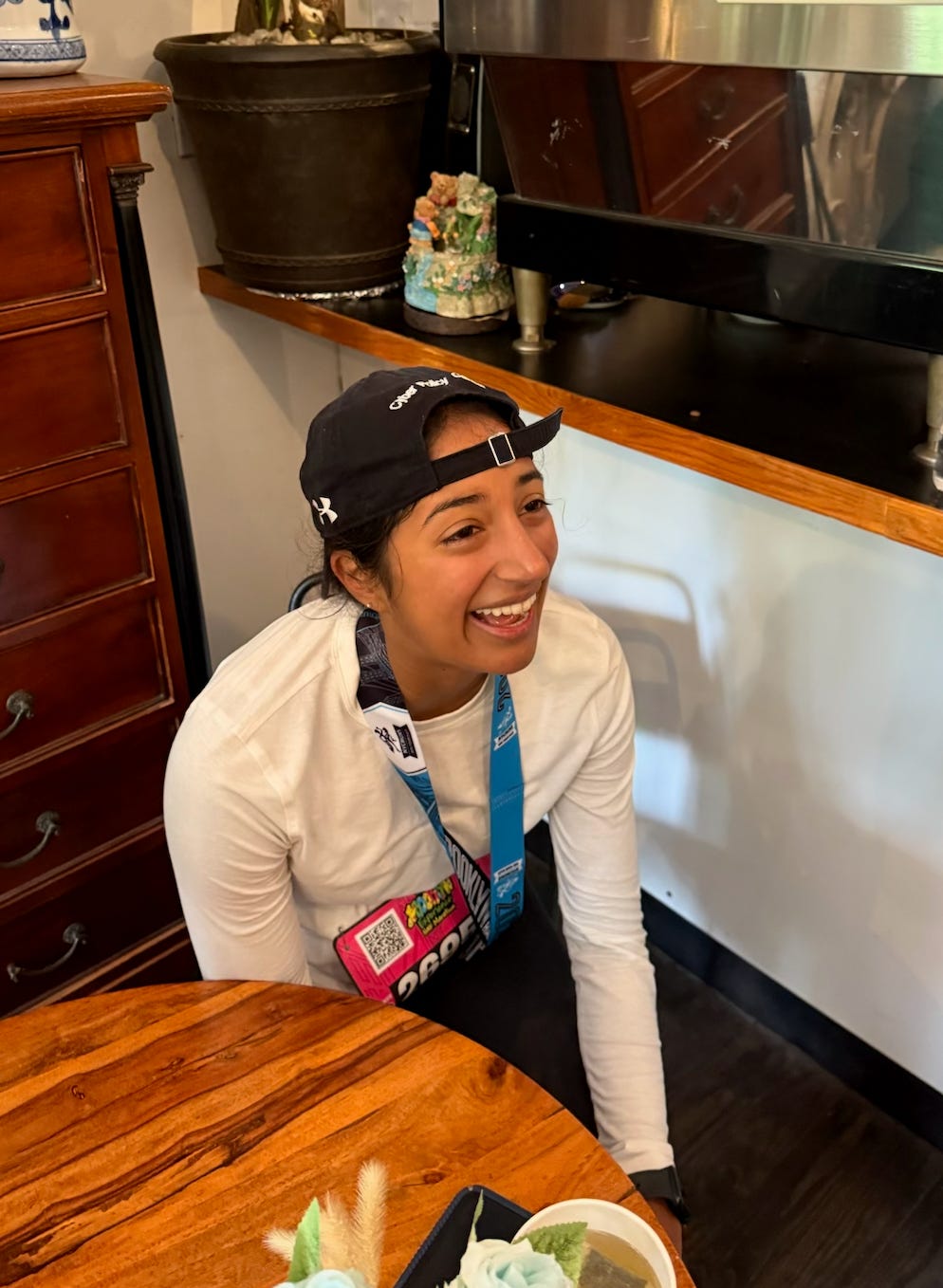
I didn’t really think through signing up to run a half marathon two weeks in advance. I definitely didn’t think through finishing — exhausted and frickin freezing — in the Brooklyn cold, with nothing but the clothes I’d run in. So the night before, I found myself wondering: who could I ask to travel all the way to Brooklyn on a Sunday morning, likely post a night out, to bring me a sweatshirt and perhaps even a sweatpant?
The answer was hometown hero Raveena Lele. She showed up, warm clothes in hand. And I am eternally grateful. Because in that moment I couldn’t help but wonder (eyeroll) — amidst all these transitions and microdecisions — how many people in my life could I actually count on to show up for me?

Hello reader—welcome back to #SATC. Today’s name of the game is reliability (we’ll ignore the irony that I’m supposed to reliably posting every Sunday).
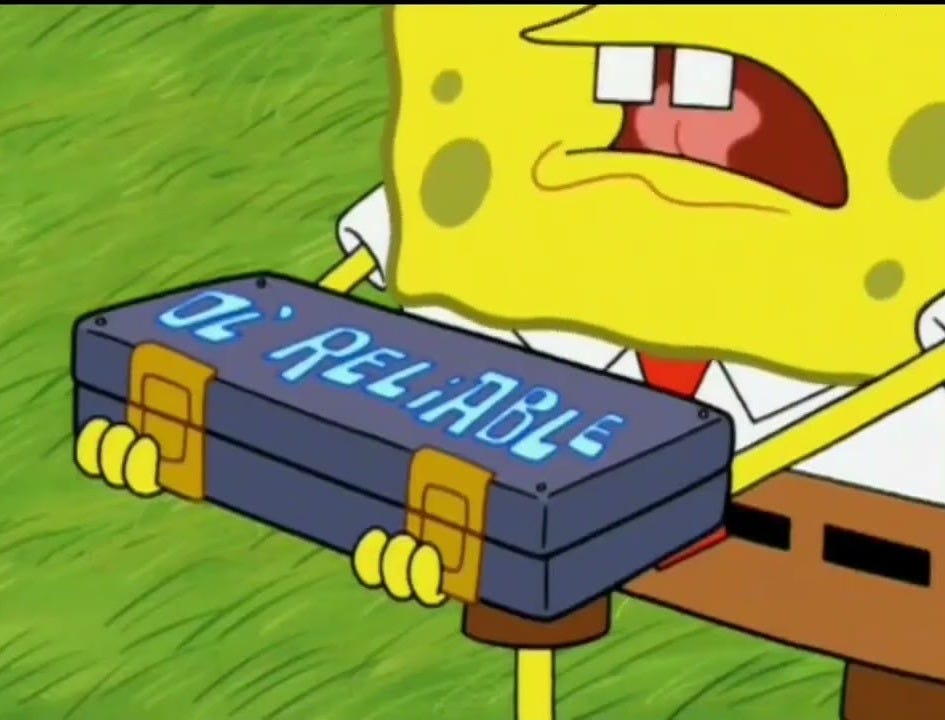
ole reliable
“Reliable” isn’t generally the first word I’d want someone to use to describe me. Charismatic? Yes. Fascinating? Please. Ol’ reliable? That’s what I called my old car Sexy Lexy before she broke down on the way to Brown Brunch (remember @Naima and @Parthav).
The phrase actually has a history. The Louisville & Nashville Railroad — chartered in 1850 (yes across the Appalachians @Tobey), operating for 132 years — earned the nickname “The Old Reliable” by the late 1800s for its financial stability and consistent service through war and depression alike. A machine that just ran — same route, same standard, decade after decade. I think that’s actually a decent metaphor for how reliability works in people too. It’s not glamorous. It’s not a personality. It’s just what happens when you make the same right choice enough times that it becomes automatic.
Which brings me to what YOUNG reliable looks like. Older adults seem to have reliability baked into their infrastructure. What doesn’t get said enough is how it got there: choices, made repeatedly, until they became character. My take? Reliability isn’t a personality trait. It’s a skill. And the sooner we decide to build it, the better.

on flaking
Flaking isn’t laziness imho (in my humble opinion for my older readers)— It’s conflict avoidance with better branding.
It was rampant at Stanford and on the West Coast — the “oh we should get coffee sometime” that happens never, the yes to a Partiful invite that means zilch. In college it was easy to get away with — if a friend wasn’t texting back, I could walk next door. My roommate was twenty feet away. Today, would I take the L train to Brooklyn to do the same now? Unlikely.
Here’s what bothers me most: we have more communication tools than any generation in history. A text takes three seconds. A voice note takes two. If anything, that should make flaking less permissible. And yet we’ve somehow used the ease of a last-minute cancel as cover for never having to truly commit to anything at all.
I have a friend who doesn’t respond to texts, only calls. When I asked about it, they said it gave them aura — like unreliability was a form of subtle social clout. I get the instinct. Nobody wants to be the person texting three paragraphs about why they can’t make it to a Tuesday happy hour. But there’s a difference between being selective and being evasive. What we’re really saying in our acts of unreliability is quiet but clear: my time is more valuable than yours. Maybe for some people that’s true. But surely not for everyone (Side note: In my experience, this skews. Women run more reliable than men — and I think it’s a maturity thing but that could be a whole article)
the wince
So why do we still flake, even when we know better?
There’s a fellow Substacker I’ve been following who describes something she calls the wince — “this visceral sense of wanting to duck away, lean out, swerve.”
I know it well. A couple weeks ago at work: traveling every week, running on fumes, came down with a fever on the first day of a new project. Said nothing — not because I didn’t know what I needed, but because I felt guilty and ashamed of being human enough to get sick. Pushed through, stayed quiet, and came across as exactly what I was trying not to be: uncommunicative. Unreliable.
The feedback stung. Mostly because I knew it was fair. I had let the wince win.
The silence I chose to avoid disappointing people I valued was the disappointment. And it was definitely avoidable.
the three principles of reliability
Reliability isn’t about always showing up. It’s about closing the gap between what people expect from you and what you actually do. We know the classic business principle: underpromise, overdeliver. What this framework loses is the middle — how and when you communicate that promise. That’s where people (ahem me in example above) actually fail it. Here’s how I think we do it:
🤝 Underpromise — be selective. Know what you can actually give before you open your mouth. The problem isn’t that people flake — it’s that they over-commit with good intentions and disappear when reality catches up. My sisters always say I’m DTM (doing too much). They’re not wrong.
☎️ Communicate — close the delta before it enlarges. If you want to leave the party early, say so at the top of the night (I could do better at this). Gonna work through dinner? Say it in the morning, not ten minutes before. The wince moment is exactly where reliability is decided. A quick honest text will always land better than silence followed by an apology.
🚚 Overdeliver — easy once you’ve done the first two. When you’ve set honest expectations, meeting them feels like exceeding them. That’s integrity in practice.
It works just as much in work settings. My dad would rather manage someone who always hits their deliveries than the smartest person in the room who’s a flake. And in friendship — in a city where nobody owes you anything — the people who show up especially when it’s inconvenient are the ones you build your life around. Who helps you move. Who remembers your birthday without Instagram. The standard is the same in both places: say what you mean, mean what you say, and close the gap.
conclusion
I think my generation has a word problem — not vocabulary (though those literacy rates aren’t looking great), commitment. We say things we don’t mean, make plans we don’t keep, and somewhere decided that being hard to pin down was a personality.
It’s not. It’s a choice. And so is the alternative.
My friend Peyton calls it being a person of your word. When I say something, can you trust it? Does it mean anything? That’s not really a question about reliability. It’s a question about integrity. And integrity is learnable. It’s what happens when you make the right choice enough times it starts feeling like instinct.
Call me old fashioned. Heck, maybe I am. But I’d be honored to be my friends’ ol’ reliable. For now I’ll settle for an imperfect young reliable.
Catch me in pursuit of being a woman of my word. 🫡
— DG
Addendum here I would substitute over deliver with FOLLOW through